Showing posts with label Monsters. Show all posts

Thursday, January 11, 2024

1989- Hollywood’s Year Underwater


1989- Hollywood’s Year Underwater

                Webster defines coincidence as 1) the act or condition of coinciding 2) the occurrence of events that happen at the same time by accident but seem to have some connection.

Certainly, Hollywood tends to focus on trends (i.e. concepts that have proven to make money) and occasionally we see clusters of films arrive close together that seem to cover the same ground. 1997 featured 2 volcano themed disaster movies (Dante’s Peak and Volcano) that were in the theatre only a few months apart. The summer of 1998 featured even bigger disaster films with Deep Impact and Armageddon, arriving back to back, each featuring world destroying asteroids. Gerard Butler and Channing Tatum both tried to save the President in 2013 (White House Down and Olympus Has Fallen).

But 1989 featured not two, not three, but at least four movies with themes and plots so similar that its difficult to remember which plot was which and which star was in which film. They run the gamut of scope and budget from a cheap B movie to a major studio event film.  Deep Star Six, Leviathan, Lords of the Deep and The Abyss all feature science fiction/ horror stories taking place almost entirely underwater, featuring recognizable but clearly advanced technology pitting working class humans against strange creatures in the ocean’s depths (a fifth movie, The Evil Below, with June Chadwick, is often inappropriately lumped in with this group but its neither science fiction nor thematically similar, it just features scuba divers).

So what was responsible for this rush to the ocean’s depths? There is no obvious thing to point to but there are a few things that possibly contributed to it.


First, America’s love of space themed science fiction had been going strong for 40 years, beginning almost as soon as WW2 ended. The exploration of space, and the fiction that went with it, was seen as generally optimistic and almost always exciting. Its possible that by the 1980s the public passion for this had begun to wane. Probably, Ronald Reagan’s proposed “Star Wars program” ( which was presented to the public, perhaps inaccurately, as a string of killer satellites surrounding the globe) put a bit of a damper on public optimism. Certainly, the Challenger explosion in 1986 changed public opinion and ground American space exploration to a halt for a very long time. So, it’s possible that science fiction, as a genre, turned its attention away from the stars to the equally mysterious ocean depths.


In 1985, oceanographer Bob Ballard discovered the long lost wreck of the Titanic, the ship that had preoccupied western imaginations since its disastrous sinking over 70 years earlier. The next year, Ballard returned to the wreck and was able to produce detailed pictures that captured the public’s attention and probably got the gears turning in the heads of creative types in Hollywood. Certainly, it got the attention of James Cameron who would direct The Abyss and later devote a significant chunk of his career to The Titanic.

Speaking of James Cameron, circa 1989, he might have been the hottest commodity in show business. He directed Terminator in 1984, which was an immediate hit and became one of the most important science fiction films of all time. He followed that up with Aliens, which made its budget back five times over and was nominated for seven Oscars, winning two. Cameron had had the idea for The Abyss for years but finally wrote a script for it in 1987 and then began the monumental task of pre-production before beginning filming in late 1988.

Given Cameron’s recent track record of success, it’s easy to imagine various Hollywood executives saying “hey that James Cameron is doing an underwater pic, maybe we should do one too.” This was most definitely the case with Roger Corman’s Lords of the Deep. Corman always had an uncanny ability to predict success and hop on board before the train left the station (case in point, Corman’s low budget Carnosaur which beat Jurassic Park by a few months and was able to cash in on the dinosaur craze that Jurassic Park created).

So possibly that explains how the stage was set for Hollywood’s year of sub aquatic adventure. But how do the films compare? And what has been their legacy?


Deep Star Six

Released January 13, 1987

Director-Sean S. Cunningham

Cast- Greg Evigan, Nancy Everhard, Miguel Ferrer, Nia Peeples, Matt McCoy, Taurean Blacque, Marius Weyers

                The first of 1989’s undersea movies featured a mixed crew of civilians and U.S. Naval personnel winding down their tour at an undersea military base. The group is developing undersea colonization while also installing a missile platform.  The scientist (Nia Peeples) discovers an undersea cavern and wants to study its ecosystem, much to the dismay of the company man (Wyers) who wants to stay on schedule for installing the missile platform.

                Disregarding the promise of science, the suit uses explosives to destroy the cavern. The explosion opens up a fissure in the sea bed and a prehistoric predator escapes out of it, terrorizing the aquatic explorers. The alpha male of the group is played by Greg Evigan, who was pretty familiar to 80s audiences from his starring role in BJ and the Bear as well as costarring in the sitcom My Two Dads. There are other actors that sci-fi and horror fans might recognize, chief among them being Miguel Ferrer (Robocop, The Stand, The Guardian, The Night Flier, and Twin Peaks).

                The film benefited from a veteran director. Sean Cunningham, who had directed the original Friday the 13th  and served as a producer for several more Friday films and had worked with Wes Craven.  The movie’s monster, which looked like the offspring of a worm and a crustacean, looked OK, but was probably a bit too exotic to translate well to the screen. Overall though, the movie was a competent sci-fi/horror film that served as the opening salvo for the wave of movies that year.


Leviathan

Released March 17, 1987

Director- George P. Cosmatos

Cast- Peter Weller, Amanda Pays, Richard Crenna, Ernie Hudson, Daniel Stern, Lisa Eilbacher, Michael Carmine, Héctor Elizondo, Meg Foster

                Leviathan followed hot on the heels of Deep Star Six and given that movies stayed in the theatres longer in the 80s, its easy to imagine audiences showing up not quite sure which movie they intended to see.

                A crew of undersea miners is supervised by a geologist (Peter Weller) who answers to a corporate suit (Meg Foster). In the process of their work, the miners find a lost, sunken Soviet submarine. Some of the crew members become contaminated by a substance brought back from the sub. As is later revealed, the Soviets were experimenting with genetic engineering in an attempt to create warriors perfectly suited to undersea life. The result is that anyone exposed to the mutagen transforms into a sea monster.

                Leviathan was helmed by a director with some serious credits to his name. Cosmatos had directed Rambo: First Blood Part 2 (where he also worked with Richard Crenna who plays the doctor in Leviathan) and Cobra. After Leviathan he went on to direct what was the last great Western, Tombstone. The film has the most recognizable cast for genre fans. In addition to Peter Weller (Robocop, Naked Lunch, Screamers) and Richard Crenna, Enrie Hudson (Ghostbusters and The Crow) has a big part along with Amanda Pays (The Flash, Max Headroom, The Kindred) and Meg Foster (Masters of the Universe, They Live, Lords of Salem).

                Judging by its availability on steaming sites, compared to Deep Star Six, Leviathan has fared better, in the long run, though neither one lit up the box office.


Lords of the Deep

Released April 21, 1987

Director- Mary Ann Fisher

Cast- Priscilla Barnes, Bradford Dillman, Daryl Haney, Melody Ryane, Eb Lottimer, Greg Sobeck, Richard Young, Roger Corman, Stephen Davies

                The most futuristic of the undersea films to come out in 1989, Lords of the Deep is set on an Earth where the ozone layer has been burned away and science is looking for a way to sustain life under the sea.

                A scientist (Priscilla Barnes) is working with a slime she discovered that gives her cosmic visions. Later, one of the crew members is mysteriously turned into the same kind of slime and then starts to evolve into some kind of alien sting ray. The creature escapes and crew members start disappearing. On top of all of this, the corporate suit running the place (Dillman) is trying to use the facility’s computer intelligence to permanently silence anyone who might cause problems with their corporate bottom line.

                Priscilla Barnes is best known as Terry from Three’s Company but also appeared in Mallrats, License to Kill and The Devil’s Rejects. Bradford Dillman had the lead roles in Joe Dante’s Piranha and William Castle’s Bug and had supporting roles opposite of Clint Eastwood in The Enforcer and Sudden Impact.  Besides Barnes and Dillman, the rest of the cast is likely unrecognizable to average horror/ sci-fi fans with the possible exception of Richard Young who fans may recognize from Friday the 13th V and Indiana Jones and the Last Crusade.

                The film was released in the theatres but I’m sure it was meant to make most, if not all, of its money in the video stores. It would probably have been forgotten if not for its temporal association with 1989’s other underwater films.


The Abyss

Released August 9, 1987

Director- James Cameron

Cast- Ed Harris, Mary Elizabeth Mastrantonio, Michael Biehn, Leo Burmester, Todd Graff, John Bedford Lloyd, Kimberly Scott, Chris Elliott, Dick Warlock

                Unlike the first three films which arrived in quick succession, The Abyss didn’t arrive in the theatres until the others were long gone. This was appropriate as it was as different from its predecessors as a filet mignon is from a Big Mac.

                Younger audiences probably only know James Cameron from the CGI fest Avatar and its sequel. But old school Cameron did things practically, no matter the scale. The Abyss was filmed underwater with vast sets and included cutting edge technology that was invented just to make the filming of the movie possible. This paid off with a super realistic film that does not have the slightest whiff of camp or cheapness.

                A group of blue collar oceanic drillers find their underwater platform commandeered by a group of Navy SEALs that are trying to salvage sensitive material from a sunken nuclear submarine. The platform’s designer (Mastrantonio) encounters an undersea alien life form. The lifeform is curious about the humans but runs afoul of the SEALs commander (Biehn) who is slowly losing his mind due to high-pressure neurological syndrome.  The rogue SEAL decides to use a scavenged nuclear warhead to kill the aliens. The foreman of the drillers (Ed Harris), straight from Miller time, has to stop him.

                The Abyss is Cameron’s most ambitious film considering what it took to make it. It  made its money back but was nowhere near the success of Aliens. It was probably a bit too far out and high brow for a mainstream audience but remains a well respected movie among sci-fi fans and movie buffs.


Legacy

                Those four movies were not the last of the undersea sci-fi/horror films. Another film, The Rift, was slow on the draw and didn’t hit the screens until 1990. Like Lords of the Deep it was low budget, and like Lords of the Deep is probably only remembered because of its association with its better-known competitors.  Hollywood has revisited the ocean depths for science fiction/ horror films a few more times since. Most notable is the star studded cast of Sphere (1998) and Underwater (2020). Underwater is a pretty competent sci-fi horror film that might have fared better except that it hit the screens the same time as Covid-19 hit America, dooming it to failure (along with most other Hollywood productions that year).

                Deep Star Six and Leviathan have both become cult films, but are essentially niche films for fans of sci-fi/horror and monster movies. The Abyss’ greatest legacy is probably less the film itself and more the advancements in CGI that the film necessitated.  James Cameron, like George Lucas, has been as much of a film innovator as a film maker.

                For the most part though, Hollywood  doesn’t seem to have much stomach to spend a lot of time underwater anymore. One reason may be cost. Sphere, Deep Star Six, and Leviathan struggled just to make their initial budget back, while Underwater was a financial failure. The Abyss doubled its budget in profits but Cameron’s next film Terminator 2 quintupled its budget. So the public interest in underwater movies may not be enough to justify the high cost of making a subaquatic epic.  There will still be more undersea sci-fi/horror movies in the future. Certainly ,the shark themed films like Deep Blue Sea and The Meg did well financially. But we probably won’t see a grand aquatic event film on the scale of The Abyss again.


Monday, September 21, 2020

The Barge People


The Barge People

2018

Director- Charlie Steeds

Cast- Kate Davies-Speak,  Mark McKirdy, Makenna Guyler, Natalie Martins, Matt Swales, Kane Surry, Emma Spurgin Hussey, Tim Cartwright, Carl Andersson, David Lenik, Barrington De La Roche, Sam Lane, Harrison Nash

            Two young British couples decide to take a (romantic?) cruise down a canal way aboard a barge. Well one and a half couples. The other member is a super annoying prick who is going along to please his girlfriend and spends his time acting like a jerk. I have to say, the whole recreational barge thing was a new one on me.


            Anyway, while traveling down the waterway, they run afoul of a young redneck family (or whatever the British version of rednecks is).  The rednecks are about to have their violent way with the couples when an even worse menace appears; The Barge People!

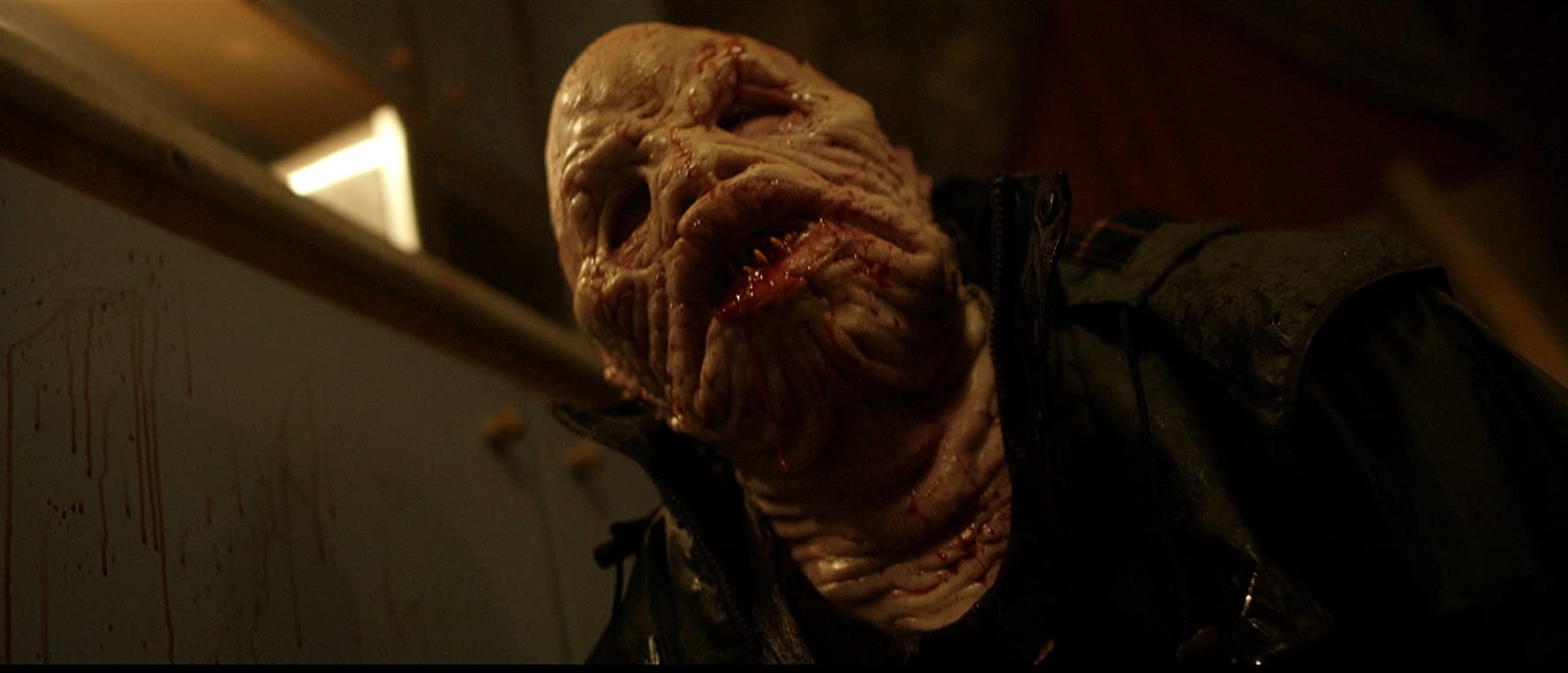
            They are a family of amphibian fish-men that live on the waterway. They kidnap people and eat them, preferably alive. But these aren’t the primordial Creatures from the Black Lagoon. They wear clothes and speak and have a sadistic streak, preferring to enjoy their victim’s fear.


            This movie is a hodgepodge of ideas that somehow work together. The piscean nature of the monsters gives them a Lovecraftian, Shadow over Innsmouth, feel and their cannibalistic sadism conjures up The Hills Have Eyes. Of course the attraction, as with any monster movie, is the monsters themselves. The effects are good old fashion practical make up and they look great. And we get to see a lot of them! None of that hiding in the shadows stuff!

            An original, entertaining film.


Wednesday, March 4, 2020

Beowulf (1999)


Beowulf (1999)

1999

Director- Graham Baker
Cast- Christopher Lambert, Rhona Mitra, Götz Otto, Layla Roberts, Oliver Cotton, Charlie Robinson, Vincent Hammond, Patricia Velásquez
           
    You already know the story of Beowulf. A monster, Grendel, stalks the halls of King Rothgar, killing people in the night. A legendary hero, Beowulf, arrives and slays Grendel only to find that its mother remains as a threat. Beowulf must then deal with her.
            
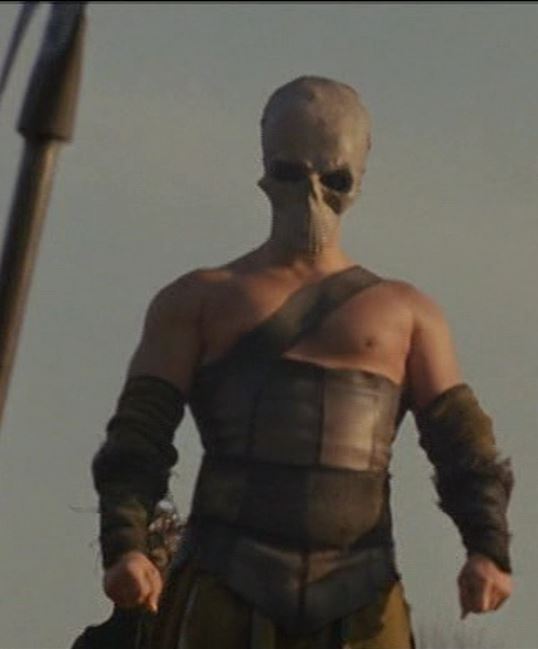
      The important thing here is not the story but how it’s told. Instead of the usual Dark Ages Scandinavian setting, this story takes place in a sci-fi fantasy setting mixing post-apocalyptic aesthetics with a medieval local. It’s like Mad Max meets Masters of the Universe, no kidding. No time or location is ever given, so it takes place whenever or wherever you think is best.


   Besides the fact that it’s a Beowulf movie, the main reason to watch this is the cast. Christopher Lambert plays the hero. For whatever reason, Lambert never achieved mainstream success but has given us an enjoyable legacy of genre films. Starting with the fantasy epic Highlander, Lambert has starred in several entertaining movies and in at least half of them he was sword fighting. It also stars genre favorite Rhona Mitra (Doomsday, Underworld 3) and Götz Otto from Iron Sky. Really old school fans will recognize Charlie Robinson who played Mac on Night Court. The part of Grendel’s mother was played by beautiful Playboy playmate Layla Roberts. Patricia Velásquez has a small part in the film. She is best known to horror fans as Anck-su-namun from The Mummy movies but also from 2019’s The Curse of La Llorona.

      The director, Graham Baker, was no stranger to genre films himself. He directed the third installment of the Omen franchise. His best known film though is 1988’s Alien Nation.
            
       This movie could serve as a time capsule of 90’s genre films. Besides the cast (Christopher Lambert starred in at least 9 sci-fi/ fantasy/ action films in the decade including Mortal Kombat and Fortress and 2 Highlander sequels) it’s got plenty of the 90’s tropes. Shot during the era of Xena Warrior Princess, Beowulf is filled with similar acrobatics and stunts. Why simply jump down when you can somersault down? Why run when you can double back flip? It also has the non-stop industrial/ electronic music that was so popular in that era. The costumes though, are better than what was usually seen in Xena or Hercules.


     The movie is pure cheese but that is not to say that it’s not enjoyable. Lambert lays it on thick as the tragic hero that’s just too brooding to fall in love. Layla Roberts is really hot has Grendel’s mom, and I’d probably watch Rhona Mitra eat crackers. The only complaint I have is that her part wasn’t very good. She was too much of a damsel in distress and if you’ve seen Underworld 3 or Doomsday then you know that she can hold her own in an action film. Also, the look of the film was cool. Grendel, when we finally get a good look, is well done, but they use this pseudo-Predator cloaking that keeps us from seeing him until the end of the film.

The movie’s grasp exceeds its reach in the finale when Grendel’s mother turns into a giant CGI monster. Cheap CGI never ages well and 90’s CGI is the worst of the bunch. But, as they say, go big or go home, and they swung for the fences.

Critically, Beowulf has a lot of flaws. But it is very entertaining, so long as you just take it for what it is; a horror/ sci-fi/fantasy/action mash up with genre favorites.


Saturday, February 15, 2020

Nightbreed


Nightbreed
1990

Director- Clive Barker
Cast- Craig Sheffer, Anne Bobby, David Cronenberg, Charles Haid, Hugh Quarshie, Hugh Ross, Christine McCorkindale, Doug Bradley, Catherine Chevalier, Oliver Parker, Nicholas Vince, Simon Bamford, Kim and Nina Robertson, Tony Bluto, Bernard Henry
           
     When it comes to monsters in horror movies, you can put viewers into one of two categories; those that root for the villagers and those that root for the monster. Clive Barker obviously falls into the latter group. Nightbreed (based on his book, Cabal) is Barker’s love letter to monsters, an ode to the outsider. Beyond that it’s a really enjoyable film that blends a monster movie with a slasher and dark fantasy.
            
     Aaron Boone (Craig Sheffer) is plagued by nightmares of him doing horrible things. He also has another dream, a dream of strange creatures running through the night.  He has heard of a place, Midian, where monsters live, and Boone believes that is where he belongs. He sees a psychiatrist, Dr. Decker (played by legendary horror director David Cronenberg) but the therapy is going nowhere. His only support is his girlfriend Lori (Anne Bobby).
            

       Unbeknownst to Boone, his psychiatrist is carrying on a double life. Dr. Decker ventures out into suburbia, with a frightening button eyed mask, and slaughters entire families. Decker gaslights Boone and convinces him that, even though he doesn’t remember it, he is the killer. After getting some hallucinogenic  drugs from Decker, Boone wonders out in front of a semi and ends up in the hospital.
            
       While there he meets another patient ,Narcisse, who has also heard of Midian and knows where it is. Boone, in order to get Narcisse’s help, convinces him that he has been sent by the Nightbreed. Narcisse believes him and in order to prove his worthiness, Narcisse peels off the skin from most of his face. Boone flees but Decker arrives hot on his heels. Decker interrogates Narcisse and learns the location of Midian.


      When Boone arrives at Midian he finds monsters called Nightbreed. Rather than being welcomed as he had hoped, he is attacked by one of the Nightbreed, Peloquin (Oliver Parker who had small roles in Hellraiser 1 and 2). Peloquin takes a bite out of Boone and he flees but runs into a trap. Decker has convinced the police that Boone is the killer and Boone is gunned down. However, death is not the end.
            
       Peloquin’s bite has transformed Boone and he rises from the dead. He makes his way back to Midian where he now receives the welcome he had hoped for. Decker tracks him down but so does his girlfriend Lori. Decker hopes to use Lori as bait to lure Boone out. In the process Decker learns about the Nightbreed. Lori, meanwhile, saves the life of one of their children. This earns her some degree of respect from the child’s mother, Rachel (Catherine Chevalier, who had a brief appearance in Hellraiser 2).
           
        Decker recruits help from a local police chief (Charles Haid, best known for Hill Street Blues) who leads a local militia. They invade Midian with the goal of killing everyone there. Boone must lead the Nightbreed in a fight for their lives.
            
      This is more than just a monster movie. Fans of Clive Barker know that he likes to incorporate religious symbolism and imagery. This is seen best in Baphomet, the Nightbreed’s god. Black skinned and dismembered, he hangs from the ceiling of his tabernacle. The Nightbreed have a tradition of prophecy that can be seen on display with the art that adorns their walls. Likewise, the religion of the humans is seen as destructive and evil as evidenced by a vision Lori has where she sees members of the Inquisition torturing and killing monsters.
           

      There are some fine performances here, most notably is David Cronenberg. His character is soft spoken and reserved, almost a cold fish. This is in stark contrast to the bloody homicides he commits. Craig Sheffer does a good job as the protagonist mixing a kind of rock and roll coolness with his desperation.
            
         Acting aside, the real stars of this film are of course the monsters. The special effects department really outdid themselves. Made before CGI, the monster are all done with good old fashioned practical effects. There is such a huge variety of monsters, even after multiple viewings you won’t have seen them all. This is the best collection of beautiful and bizarre imagery since George Lucas’ cantina scene in the original Star Wars. For a good look at over 60 Nightbreed,check out the Nightbreed Bestiary here.


       The film was not well received by the critics who, I think, just didn’t get the idea of a movie where monsters are the good guys and the humans are the villains. It didn’t make its money back. However, it developed a loyal following among fans becoming a cult favorite. Barker was not happy with the version of the film that was released (though I think it may be his best film, giving Hellraiser a run for its money). Barker cut a lot out of the movie. About 20 years after its release a concerted effort was made to track down the footage that had been cut out.  The first use of the found footage was to create The Cabal Cut that had a very limited release. Later some of the extra footage was used to make a more widely available Director’s Cut.
           

       The Director’s Cut is not simply a longer version of the theatrical release, it’s a different film. Not only were new scenes added but some old scenes were taken out. Specifically the ending of the film was also changed (and not for the better, in my opinion). I prefer the theatrical version myself. Most of the added scenes are at the beginning of the film and (to me) just slow the movie down. I can’t really compare the Director’s Cut to the Cabal Cut since I haven’t seen the latter (I checked and as of this post there were only 2 copies of the Cabal Cut available on eBay, one for $350 and one for $950, yes you read that right).
           
      The best thing would be to watch both versions, the theatrical and the director’s cut,and decide for yourself which one you like best. Currently, both versions are available on blu-ray.
         
       In addition to multiple versions of the film, the movie also inspired two different comic book series.


Fun fact- High Quarshie plays a police detective trying to track down Aaron Boone. Genre fans probably know him best as Captain Panaka from Star Wars Episode 1 but he also had a supporting role in the original Highlander film. Horror fans may also recognize him from The Church, the third film in Dario Argento produced Demons saga.

Fun fact #2- The Hellraiser connection: In addition to Oliver Parker and Catherine Chevalier there are some other Hellraiser stars appearing in this film. Craig Shaffer, who played Boone, also starred in (the less than stellar) Hellraiser Inferno. Nicholas Vince, who plays the moon faced Kinski, also played the Chattering Cenobite in Hellraiser. Simon Bamford who plays the tattooed Nightbreed named Ohnaka, played the Cenobite Butterball in Hellraiser. And of course, the leader of the Nightbreed, Lylesberg, was played by Pinhead himself, Doug Bradley. Eventually the Nightbreed and the Cenobites faced off in the comics.