Showing posts with label 1980s. Show all posts

Sunday, August 11, 2024

Dreamscape: A 40 Year Retrospective


Dreamscape: A 40 Year Retrospective

1984

Director- Joseph Ruben

Cast- Dennis Quaid, Max Von Sydow, Kate Capshaw, Christopher Plummer, David Patrick Kelley, George Wendt, Eddie Albert, Peter Jason

            Alex (Dennis Quaid) is a psychic who squanders his gifts leading an irresponsible lifestyle, supporting himself by gambling on horse races. He gets recruited into a secret, government funded project to enter people’s dreams. The project is ran by Max Von Sydow (Flash Gordon, Needful Things, The Seventh Seal), a pure scientist only interested in the exploratory possibilities. Behind him is a shadowy government figure (Christopher Plummer) who wants to use the program for spying and assassination.

The President of the United States is plagued by dreams of nuclear annihilation and is brought to the dream program for help with his nightmares. Alex is aided by a scientist (Kate Capshaw) and opposed by another psychic, Tommy Ray (David Patrick Kelly), a sociopath who is training to be a dream assassin.

Dreamscape was a highly original movie for its time with an all-star cast. But four decades later, how well has it aged? Does it still hold up and what is its place in film history?


Dreamscape was one of the first movies to be released with the PG-13 rating (right after Red Dawn, which was the first). Actually, it feels very much like the dark fantasy films that Disney was making in the late 70s and early 80s, films that would scare the crap out of you but didn’t have sex or too much violence. There's no nudity and minimal violence, so I think the PG-13 rating must have come from the disturbing imagery, which one might expect from a movie that takes place in dreams.

The special effects are all practical and still look pretty good, especially the Snakeman, a cobra headed monster that haunts a child’s nightmares. The dream world is a combination of post-apocalyptic landscapes and German Expressionism architecture.

The thing that really holds up are the performances. Max Von Sydow  was charismatic in any part and Christopher Plummer always played great Bond level villains. David Patrick Kelley, though, steals the show as the sociopathic Tommy Ray. David made a career of playing memorable villains. He’s probably best known as the gang member Luther, from The Warriors. Slightly younger fans might remember him as T-Bird in The Crow. Both of those villains, however, were chaotic. Tommy Ray is calculating and ice cold.

Given the fertile material that the dreamworld offers, its surprising that more films haven’t dipped into the premise of Dreamscape. Probably the best-known examples of similar movies are the supremely disturbing The Cell (2000), the Japanese anime Paprika (2006) and the Christopher Nolan thriller Inception (2010). Compared to those, Dreamscape blends some of the disturbing imagery of a horror film with science fiction concepts but also introduces elements of a political thriller via a plot to kill the President.


Something that sticks out to me after a recent viewing is how unlike an 80s movie it seems. The 80s fashions are toned down and there is no 80s music. This prevents the movie from feeling quaint and dated like a lot of other movies from the era.

Dreamscape won’t leave you scratching your head like Inception and it certainly won’t leave you needing therapy like The Cell. It walks a a middle ground, a little bit scary, a little bit thrilling, but still entertaining, even after 40 years. And though it was PG-13 by mid 80s standards, it has no nudity and minimal profanity or gore, so it’s a good film if you’re trying to put together a Halloween playlist suitable for younger viewers.


Thursday, January 11, 2024

1989- Hollywood’s Year Underwater


1989- Hollywood’s Year Underwater

                Webster defines coincidence as 1) the act or condition of coinciding 2) the occurrence of events that happen at the same time by accident but seem to have some connection.

Certainly, Hollywood tends to focus on trends (i.e. concepts that have proven to make money) and occasionally we see clusters of films arrive close together that seem to cover the same ground. 1997 featured 2 volcano themed disaster movies (Dante’s Peak and Volcano) that were in the theatre only a few months apart. The summer of 1998 featured even bigger disaster films with Deep Impact and Armageddon, arriving back to back, each featuring world destroying asteroids. Gerard Butler and Channing Tatum both tried to save the President in 2013 (White House Down and Olympus Has Fallen).

But 1989 featured not two, not three, but at least four movies with themes and plots so similar that its difficult to remember which plot was which and which star was in which film. They run the gamut of scope and budget from a cheap B movie to a major studio event film.  Deep Star Six, Leviathan, Lords of the Deep and The Abyss all feature science fiction/ horror stories taking place almost entirely underwater, featuring recognizable but clearly advanced technology pitting working class humans against strange creatures in the ocean’s depths (a fifth movie, The Evil Below, with June Chadwick, is often inappropriately lumped in with this group but its neither science fiction nor thematically similar, it just features scuba divers).

So what was responsible for this rush to the ocean’s depths? There is no obvious thing to point to but there are a few things that possibly contributed to it.


First, America’s love of space themed science fiction had been going strong for 40 years, beginning almost as soon as WW2 ended. The exploration of space, and the fiction that went with it, was seen as generally optimistic and almost always exciting. Its possible that by the 1980s the public passion for this had begun to wane. Probably, Ronald Reagan’s proposed “Star Wars program” ( which was presented to the public, perhaps inaccurately, as a string of killer satellites surrounding the globe) put a bit of a damper on public optimism. Certainly, the Challenger explosion in 1986 changed public opinion and ground American space exploration to a halt for a very long time. So, it’s possible that science fiction, as a genre, turned its attention away from the stars to the equally mysterious ocean depths.


In 1985, oceanographer Bob Ballard discovered the long lost wreck of the Titanic, the ship that had preoccupied western imaginations since its disastrous sinking over 70 years earlier. The next year, Ballard returned to the wreck and was able to produce detailed pictures that captured the public’s attention and probably got the gears turning in the heads of creative types in Hollywood. Certainly, it got the attention of James Cameron who would direct The Abyss and later devote a significant chunk of his career to The Titanic.

Speaking of James Cameron, circa 1989, he might have been the hottest commodity in show business. He directed Terminator in 1984, which was an immediate hit and became one of the most important science fiction films of all time. He followed that up with Aliens, which made its budget back five times over and was nominated for seven Oscars, winning two. Cameron had had the idea for The Abyss for years but finally wrote a script for it in 1987 and then began the monumental task of pre-production before beginning filming in late 1988.

Given Cameron’s recent track record of success, it’s easy to imagine various Hollywood executives saying “hey that James Cameron is doing an underwater pic, maybe we should do one too.” This was most definitely the case with Roger Corman’s Lords of the Deep. Corman always had an uncanny ability to predict success and hop on board before the train left the station (case in point, Corman’s low budget Carnosaur which beat Jurassic Park by a few months and was able to cash in on the dinosaur craze that Jurassic Park created).

So possibly that explains how the stage was set for Hollywood’s year of sub aquatic adventure. But how do the films compare? And what has been their legacy?


Deep Star Six

Released January 13, 1987

Director-Sean S. Cunningham

Cast- Greg Evigan, Nancy Everhard, Miguel Ferrer, Nia Peeples, Matt McCoy, Taurean Blacque, Marius Weyers

                The first of 1989’s undersea movies featured a mixed crew of civilians and U.S. Naval personnel winding down their tour at an undersea military base. The group is developing undersea colonization while also installing a missile platform.  The scientist (Nia Peeples) discovers an undersea cavern and wants to study its ecosystem, much to the dismay of the company man (Wyers) who wants to stay on schedule for installing the missile platform.

                Disregarding the promise of science, the suit uses explosives to destroy the cavern. The explosion opens up a fissure in the sea bed and a prehistoric predator escapes out of it, terrorizing the aquatic explorers. The alpha male of the group is played by Greg Evigan, who was pretty familiar to 80s audiences from his starring role in BJ and the Bear as well as costarring in the sitcom My Two Dads. There are other actors that sci-fi and horror fans might recognize, chief among them being Miguel Ferrer (Robocop, The Stand, The Guardian, The Night Flier, and Twin Peaks).

                The film benefited from a veteran director. Sean Cunningham, who had directed the original Friday the 13th  and served as a producer for several more Friday films and had worked with Wes Craven.  The movie’s monster, which looked like the offspring of a worm and a crustacean, looked OK, but was probably a bit too exotic to translate well to the screen. Overall though, the movie was a competent sci-fi/horror film that served as the opening salvo for the wave of movies that year.


Leviathan

Released March 17, 1987

Director- George P. Cosmatos

Cast- Peter Weller, Amanda Pays, Richard Crenna, Ernie Hudson, Daniel Stern, Lisa Eilbacher, Michael Carmine, Héctor Elizondo, Meg Foster

                Leviathan followed hot on the heels of Deep Star Six and given that movies stayed in the theatres longer in the 80s, its easy to imagine audiences showing up not quite sure which movie they intended to see.

                A crew of undersea miners is supervised by a geologist (Peter Weller) who answers to a corporate suit (Meg Foster). In the process of their work, the miners find a lost, sunken Soviet submarine. Some of the crew members become contaminated by a substance brought back from the sub. As is later revealed, the Soviets were experimenting with genetic engineering in an attempt to create warriors perfectly suited to undersea life. The result is that anyone exposed to the mutagen transforms into a sea monster.

                Leviathan was helmed by a director with some serious credits to his name. Cosmatos had directed Rambo: First Blood Part 2 (where he also worked with Richard Crenna who plays the doctor in Leviathan) and Cobra. After Leviathan he went on to direct what was the last great Western, Tombstone. The film has the most recognizable cast for genre fans. In addition to Peter Weller (Robocop, Naked Lunch, Screamers) and Richard Crenna, Enrie Hudson (Ghostbusters and The Crow) has a big part along with Amanda Pays (The Flash, Max Headroom, The Kindred) and Meg Foster (Masters of the Universe, They Live, Lords of Salem).

                Judging by its availability on steaming sites, compared to Deep Star Six, Leviathan has fared better, in the long run, though neither one lit up the box office.


Lords of the Deep

Released April 21, 1987

Director- Mary Ann Fisher

Cast- Priscilla Barnes, Bradford Dillman, Daryl Haney, Melody Ryane, Eb Lottimer, Greg Sobeck, Richard Young, Roger Corman, Stephen Davies

                The most futuristic of the undersea films to come out in 1989, Lords of the Deep is set on an Earth where the ozone layer has been burned away and science is looking for a way to sustain life under the sea.

                A scientist (Priscilla Barnes) is working with a slime she discovered that gives her cosmic visions. Later, one of the crew members is mysteriously turned into the same kind of slime and then starts to evolve into some kind of alien sting ray. The creature escapes and crew members start disappearing. On top of all of this, the corporate suit running the place (Dillman) is trying to use the facility’s computer intelligence to permanently silence anyone who might cause problems with their corporate bottom line.

                Priscilla Barnes is best known as Terry from Three’s Company but also appeared in Mallrats, License to Kill and The Devil’s Rejects. Bradford Dillman had the lead roles in Joe Dante’s Piranha and William Castle’s Bug and had supporting roles opposite of Clint Eastwood in The Enforcer and Sudden Impact.  Besides Barnes and Dillman, the rest of the cast is likely unrecognizable to average horror/ sci-fi fans with the possible exception of Richard Young who fans may recognize from Friday the 13th V and Indiana Jones and the Last Crusade.

                The film was released in the theatres but I’m sure it was meant to make most, if not all, of its money in the video stores. It would probably have been forgotten if not for its temporal association with 1989’s other underwater films.


The Abyss

Released August 9, 1987

Director- James Cameron

Cast- Ed Harris, Mary Elizabeth Mastrantonio, Michael Biehn, Leo Burmester, Todd Graff, John Bedford Lloyd, Kimberly Scott, Chris Elliott, Dick Warlock

                Unlike the first three films which arrived in quick succession, The Abyss didn’t arrive in the theatres until the others were long gone. This was appropriate as it was as different from its predecessors as a filet mignon is from a Big Mac.

                Younger audiences probably only know James Cameron from the CGI fest Avatar and its sequel. But old school Cameron did things practically, no matter the scale. The Abyss was filmed underwater with vast sets and included cutting edge technology that was invented just to make the filming of the movie possible. This paid off with a super realistic film that does not have the slightest whiff of camp or cheapness.

                A group of blue collar oceanic drillers find their underwater platform commandeered by a group of Navy SEALs that are trying to salvage sensitive material from a sunken nuclear submarine. The platform’s designer (Mastrantonio) encounters an undersea alien life form. The lifeform is curious about the humans but runs afoul of the SEALs commander (Biehn) who is slowly losing his mind due to high-pressure neurological syndrome.  The rogue SEAL decides to use a scavenged nuclear warhead to kill the aliens. The foreman of the drillers (Ed Harris), straight from Miller time, has to stop him.

                The Abyss is Cameron’s most ambitious film considering what it took to make it. It  made its money back but was nowhere near the success of Aliens. It was probably a bit too far out and high brow for a mainstream audience but remains a well respected movie among sci-fi fans and movie buffs.


Legacy

                Those four movies were not the last of the undersea sci-fi/horror films. Another film, The Rift, was slow on the draw and didn’t hit the screens until 1990. Like Lords of the Deep it was low budget, and like Lords of the Deep is probably only remembered because of its association with its better-known competitors.  Hollywood has revisited the ocean depths for science fiction/ horror films a few more times since. Most notable is the star studded cast of Sphere (1998) and Underwater (2020). Underwater is a pretty competent sci-fi horror film that might have fared better except that it hit the screens the same time as Covid-19 hit America, dooming it to failure (along with most other Hollywood productions that year).

                Deep Star Six and Leviathan have both become cult films, but are essentially niche films for fans of sci-fi/horror and monster movies. The Abyss’ greatest legacy is probably less the film itself and more the advancements in CGI that the film necessitated.  James Cameron, like George Lucas, has been as much of a film innovator as a film maker.

                For the most part though, Hollywood  doesn’t seem to have much stomach to spend a lot of time underwater anymore. One reason may be cost. Sphere, Deep Star Six, and Leviathan struggled just to make their initial budget back, while Underwater was a financial failure. The Abyss doubled its budget in profits but Cameron’s next film Terminator 2 quintupled its budget. So the public interest in underwater movies may not be enough to justify the high cost of making a subaquatic epic.  There will still be more undersea sci-fi/horror movies in the future. Certainly ,the shark themed films like Deep Blue Sea and The Meg did well financially. But we probably won’t see a grand aquatic event film on the scale of The Abyss again.


Saturday, October 21, 2023

Monster Mash: The Greatest “Verses” Films in Horror


Monster Mash: The Greatest “Verses” Films in Horror

What’s better than a horror movie? Two horror movies! And what’s better than two horror movies? Two horror movies rolled into one! The monster mash, the peanut butter and jelly of horror movies, has been around for 80 years.  Used most effectively by Universal in the 40s and Toho in the 60s, the monster vs monster formula still has the potential to give fans what they want, mainly their favorite horror creations from various films and genres all under one roof.  What follows is a list of some of the greatest monster vs. monster films out there.


25) Monster Brawl (2011)- This is less a narrative story and more of a live action fighting game. With almost no plot, the film simply features fights between various monsters in WWE style bouts. The film will probably leave most horror fans scratching their heads but there are a few that would like this, mainly those fans of professional wrestling and fighting games. Several real-life wrestling performers appear (including Kevin Nash and Jimmy “Mouth of the South” Hart). Somehow, the makers of this film got Lance Henrikson to lend his gravelly voice, doling out occasional Mortal Kombat style commentary.

24) Dr. Jekyll y el Hombre Lobo (Dr Jekyll and the Wolfman) (1971) -The first of many Paul Naschy films to appear on this list, this is a pretty ingenious idea that I’m surprised Universal never thought of, as both Mr. Hyde and the Wolf Man involve the unleashing of our darker, bestial sides. Naschy plays both Mr. Hyde and the Wolf Man with veteran horror actor Jack Taylor as Dr. Jekyll. A solid film that fans of Spanish horror will enjoy.

23) The Creeps (1997)-If you were a Gen X fan of horror, Full Moon Pictures was the best thing going from the late 80s through the 90s. Their movies were usually low budget, but never looked like it, and as they were skipping the theatres and marketing straight to the video store, they usually had some creative ideas. A plot that is too convoluted to bother with involves a mad scientist trying to bring to life history’s greatest monsters; Dracula, the Frankenstein Monster, the Mummy and the Wolf Man. He succeeds, but the process goes awry and the monsters are created as 3 foot tall versions of themselves. The pack of pint sized terrors is led by Dracula, played by veteran genre actor Phil Fondacaro (Willow, Bordello of Blood, Troll, Dollman vs Demonic Toys (which appears later on this list) and about a million other things.

22) La Maldicion de la Bestia (Night of the Howling Beast) (1975)- Another Paul Naschy film with him as the Wolf Man. In this installment, his doomed protagonist finds himself in the Himalayas.  There is a circuitous plot involving a group of mountain witches and an army of bandits, but what lands the film on this list is the finale which features Naschy’s Wolf Man fighting the Abominable Snow Man (aka the Yeti).

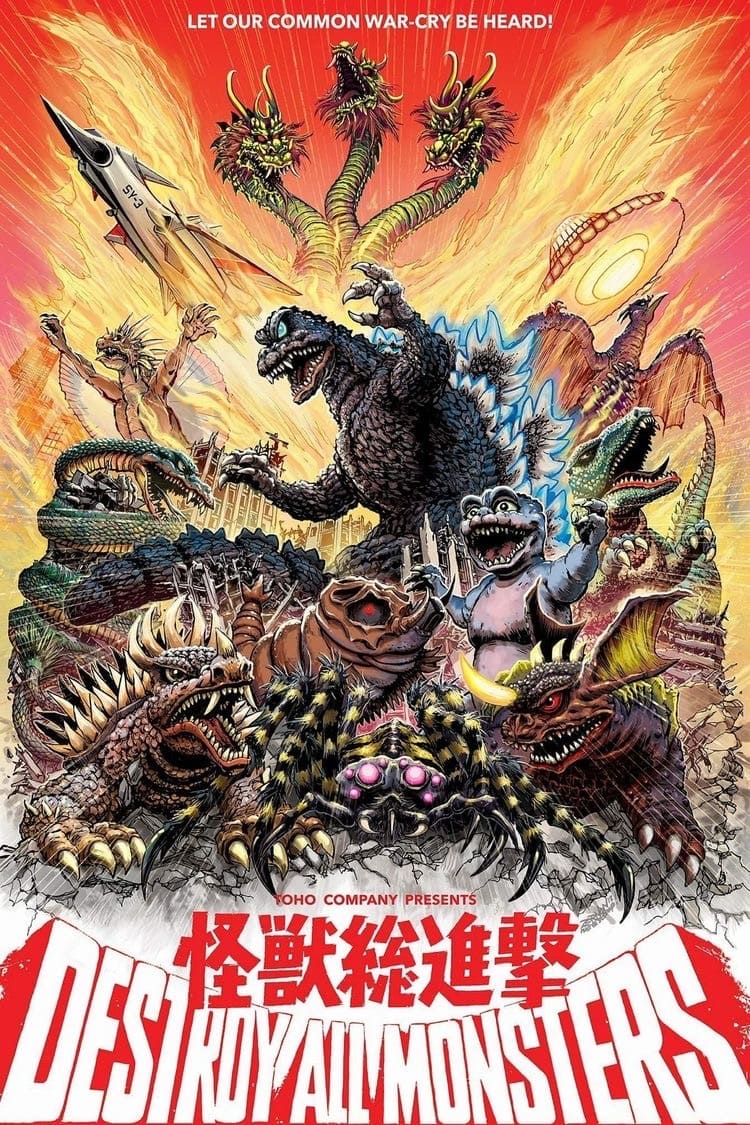
21)-Destroy All Monsters (1968)- Most Godzilla films feature Godzilla vs other monsters. Often these monsters  are created just for that film, but occasionally other monsters are imported from other franchises. The Shōwa period of Godzilla films (i.e. the 60s and 70s) was a mixed bag with some movies that were serious, some farcical and all with a little camp. Destroy All Monsters is heavy on the camp, maybe too heavy, which prevents it from landing higher on the list, but for kaiju fans it is a must see, being a veritable who’s who of 50s and 60s Japanese monsters: Godzilla, King Ghidorah, Rodan, Mothra, Baragon, Manda, Varan and others.

20)- Assignment Terror (Los Monstruos del Terror) (1970)- Another Paul Naschy film with him as the Wolf Man. In this film, aliens (???) bring to life a werewolf, a mummy, Frankenstein’s monster and a vampire with a plan to use them to take over the world, because sure why not. The Wolf Man (who ,interestingly, is always the protagonist in both the Universal films and the Naschy films) has to fight the other monsters in turn in order to save humanity. This film is pretty weak compared to Naschy’s other films of the period, but you have to give credit to the ambitious story.

19)-House of Dracula (1945)- The penultimate monster mash for Universal, it was preceded by House of Frankenstein.  Lon Chaney Jr. reprises his role as the tortured Wolf Man and Glenn Strange returns as Frankenstein’s monster. John Carradine reprises his role as Dracula and thankfully gets more screen time than he did in House of Frankenstein. It also features Universal horror regular, Lionel Atwill.

18)- The Robot vs. The Aztec Mummy (1958)- If you are unfamiliar with Mexican horror, the first thing you need to know is that it never followed the “rules” of American horror, and nowhere was this more evident than in the Aztec Mummy trilogy. These films feel like something a group of kids came up with while hopped up on too much candy and soda. The final film in the saga features the ever-vengeful Aztec mummy fighting a mad scientist and his very atompunk looking robot man. Pure fun.


17) Alien vs. Predator (2004)- A film that sort of gave fans what they wanted while also leaving them wistfully hoping for more. The premise for this started in the 1989 Dark Horse comic and in typical Hollywood fashion, they rejected the source material in favor of something else. Ever since the ending of Predator 2, which showed an Alien skull mounted as a trophy in a Predator ship, fans had hoped for this match up. Alien vs. Predator has good looking Aliens and good looking Predators, but it lacked the punch of the better volumes of either franchise. Pretty much mandatory viewing for fans of both franchises but most other horror fans can skip it.

16) Dollman vs Demonic Toys (1993)- A crossover between three different Full Moon films; Dollman (a futuristic cop shrunk to the size of a GI Joe and played by Tim Thomerson; Demonic Toys, toys powered by infernal spirits; and Bad Channels a story about reality warping aliens. The film wouldn’t make a top 10 list of Full Moon features, but is notable for the comic book like attempt to bring so many properties together.


15) House of Frankenstein (1944)- This film is the direct sequel to Frankenstein Meets the Wolfman (which appears later on the list) and features Lon Chaney again as the Wolf Man. This movie is the first of 3 times that Glenn Stange would play Frankenstein’s Monster. John Carradine is a rather dapper Dracula, who unfortunately gets very little screen time. The best part though is the addition of Boris Karloff as the antagonist of the story. A truly fun film for fans of Universal monsters.


14) Underworld: Rise of the Lycans (2009)- This is the third film in the Underworld franchise and the only one that doesn’t star Kate Beckinsale. What sets it apart from its leather clad brethren is its setting, taking place entirely in the Middle Ages. The film attempts to tell the franchises backstory about how the centuries old war between werewolves and vampires began. Strong performances from everyone involved and some really nice black armour for the vampire knights. Even though its best viewed after seeing Underworld, it’s totally watchable as a stand-alone film.


13) Godzilla vs. Mothra (1992)- In case you’re not hip to the lingo, about every 15 years, the Godzilla franchise reboots itself and a new “era” of films begin, with only the original 1954 film remaining in cannon. The second era, the “Heisei” era, ran through the 80s and 90s and is notable for creating a single cohesive story that loosely connects all of the films together.  This film features a match up between Big G and Mothra and is essentially a reboot of the Showa period film featuring the same match up. It is a technically better made film than its predecessor and even introduces a new monster, Batra, a sinister version of Mothra. As good as it is, it’s still a remake and you always get bonus points for being first, which is why I put it just slightly behind the original.

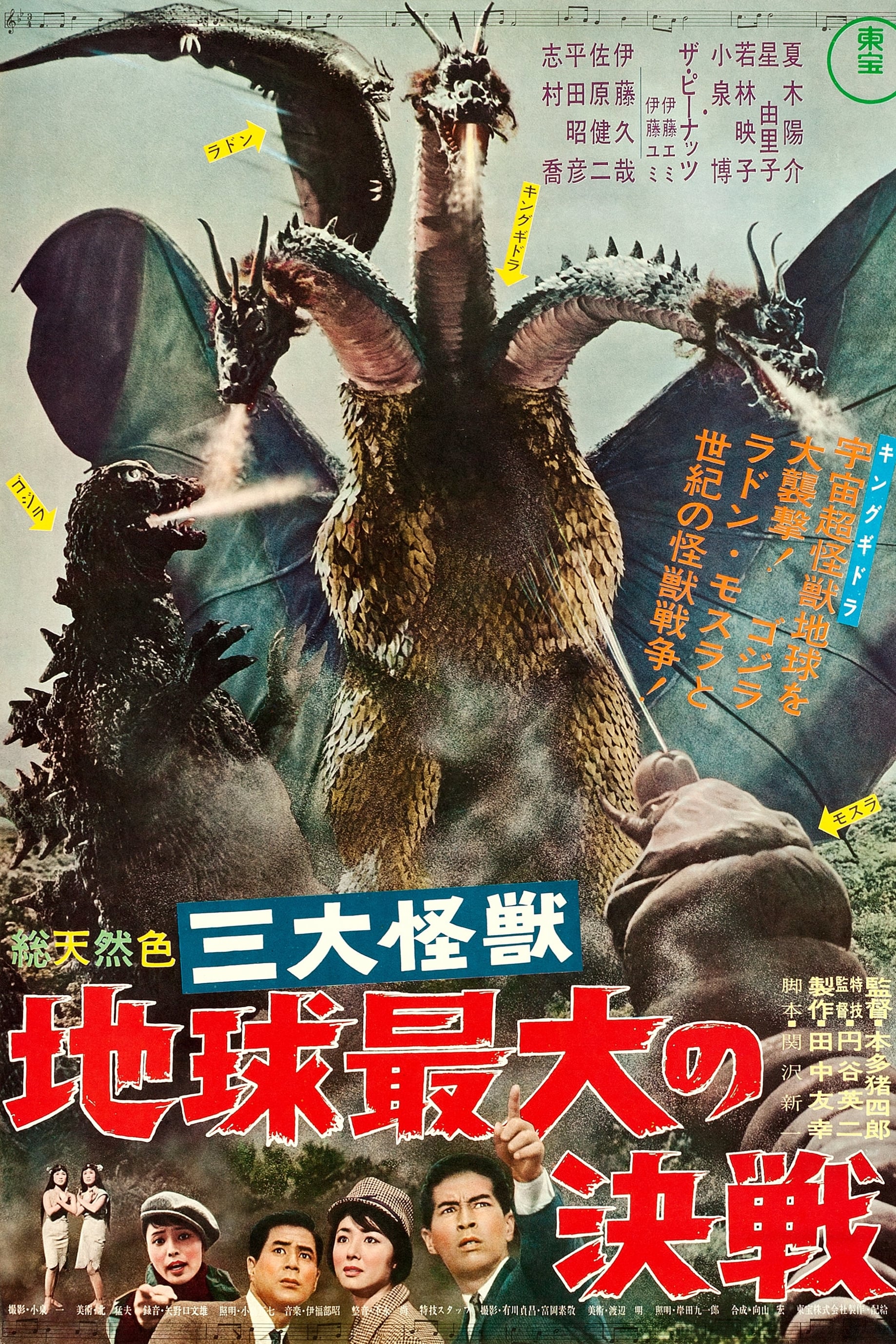
12) Ghidorah, the Three-Headed Monster (1964)- A true Godzilla battle royal featuring Godzilla’s most dangerous foe, the three headed dragon King Ghidorah.  But we also get Rodan and Mothra who team up with Godzilla to beat the evil dragon. A fun film, it takes itself more seriously than Destroy All Monsters and this really helps the story. A truly entertaining film and a must see for kaiju fans.

11) Mothra vs. Godzilla (1964)- Mothra is one of the most interesting and bizarre kaiju to come out of the genre. Not only is she largely a benevolent creature but she is usually accompanied by her two twin fairies that sort of speak for her. Mothra had previously appeared in her own 1961 film. As it was a huge success, it was only natural that she team up with Godzilla. Mothra movies are always a little weird and this helps elevate the match up above most of the other Godzilla movies.

10) Werewolf vs The Vampire Woman (La Noche de Walpurgis) (1970)- The final Paul Naschy film to appear on this list, it is maybe his best film, and definitely the best of his werewolf movies. In this installment, the doomed lycanthrope must go against a vampiric queen of the undead.  The film is a real masterpiece of 70s horror featuring beautiful women, spooky ambiances, morbid visuals and Naschy at the top of his game. Worth seeing even if you are totally unfamiliar with the franchise or Spanish horror. It’s just a great looking, creepy film.

9) Underworld (2003)- Werewolves had been fighting vampires on screen for almost 60 years by the time this film came out, but no other film has done it as well, before or since. Underworld tells the story of Selene, a soldier in the vampire army whose sole reason for existence is to hunt down and kill their furry enemies. Her un-life gets more complicated when she falls in love with a mortal who is at the center of a werewolf plot to destroy the vampires. A super stylish film and Kate Beckinsale is smoking hot decked out in latex and leather. A must see for fans of the old White Wolf role playing games.


8) Mad Monster Party? (1967)- Not really a horror movie as much as a fun homage to horror movies. Mad Monster Party? was brought to us by Rankin and Bass, the masters of animation that gave us the classic Rudolph the Red Nosed Reindeer as well as the 1977 version of The Hobbit and the 80s dark fantasy The Last Unicorn. The film features a who’s who gathering of monsters with practically every western horror icon appearing. It also features the voice of Boris Karloff as the mad scientist organizing the affair. Mandatory viewing for Halloween, and fun whether you’re 8 or 48.


7) Van Helsing (2004)- Following the success of the first two Brendan Fraser Mummy films, this was Universal’s next attempt to revitalize its monster franchises since it closed up shop in the 1950s. Hugh Jackman plays the titular Van Helsing who teams up with Kate Beckinsale (fresh off the success of Underworld) to fight Dracula, his Brides, the Wolf Man, Frankenstein’s Monster and even the Hunchback of Notre Dame. A very stylish movie that is well made with high production values that refuses to take itself too seriously. The late 90s/ early 00s was a bit of a low point for horror but this film has aged better than most of its counterparts of that era.

     One question remains: Stephen Sommers made both the 1999 Mummy and Van Helsing and both films were successful. Why did we never get Van Helsing vs The Mummy?


6) King Kong vs. Godzilla (1962)-OK, first off ,this film looks like crap compared to some of the other Godzilla films of the same era. Godzilla’s design has changed many times, sometimes making Big G look scarier, sometimes sillier. This design is about middle of the road but it seems like a Ray Harryhausen sculpt compared to the Kong design, which makes you wonder if the film makers ever even saw a picture of an actual gorilla.  So how could I have it placed so high? Because its King Kong verses Godzilla!!! This is the kind of film that fanboys and fangirls grow up dreaming about! This isn’t the typical Godzilla crossover with multiple Toho properties meeting under one roof. This was 2 monsters from 2 different film companies from opposite sides of the planet! This was like putting Ric Flair and Hulk Hogan on the same tag team! Or having the Avengers fight the Justice Leage!

    The film is pure camp, but for lovers of kaiju, it doesn’t get any more fun than Kong vs. Godzilla.


5) Freddy vs. Jason (2003)- What King Kong vs. Godzilla was to kaiju fans, Freddy vs. Jason was to slasher fans. Freddy and Jason were the kings of 80s slasher films (Freddy had 5 films in the 80s while Jason had 8, compared to Michael who only had 3 in the decade and Leatherface who only had the 1).

    By the 21st century, both franchises had long since passed their primes but this film gave fans something to get excited about with a new film that actually offered something creative without simply relying on nostalgia to carry the story. The most amazing thing about the film is how faithful it is to both characters. You never get the feeling that either character has been plucked out of its home franchise and dropped into unfamiliar lands. The story feels natural and the characters are just as you remembered them. A great achievement in the annals of slasher film history.

4) Waxwork (1988)-Of the many great horror films of the video store era, this is one of the best because of its fun, its creativity and its high production values. The story surrounds a nefarious wax museum run by a sinister curator (David Warner). A preppy college student (Zach Galligan) starts nosing around after his sort of girlfriend goes missing after visiting the museum. What he discovers is that the museum is playing home to real life monsters whose spirits are stored in the displays.

    And what a list of monsters it is: Dracula, a werewolf, a mummy, the Marquis de Sade, not to mention appearances from Frankenstein’s creature, zombies, and various murders, monsters and more. There are also appearances by Miles O’Keefe and John Rhys-Davies. A very entertaining film with good looking special effects and some memorable monsters.

3) The Monster Squad (1987)- The plot is simple, Dracula is trying to bring about the end of the world with the help of the Wolf Man, the Mummy and the Gill Man. All that stands in his way are a group of kids aided by Frankenstein’s monster.

    The film’s strength is its total commitment to being fun. The kids are likable if occasionally unbelievable and Dracula is thoroughly evil. Duncan Regehr’s portrayal is very memorable, making his Dracula a little bit like a Bond villain. The monster effects all look beautiful, especially the Wolf Man which has a design echoing Hammer’s Curse of the Werewolf. As a bonus, this movie is totally appropriate for kids. Definitely needs to be on your Halloween watch list if you are looking for something without sex and (too much) gore.
2) Frankenstein Meets the Wolfman (1943)- This is the granddaddy of verses films and really the film that created the blueprint for monster vs. monster movies. The only reason its not #1 on the list is because the final film just has so much to offer.

In this film, Lawrence Talbot (dead after the events of The Wolf Man) is brought back to life and is actually pretty depressed about it. While most of us might be stoked at a second chance, all Larry can see is an eternity dealing with the curse of lycanthropy. He learns about Dr. Frankenstein’s work and reasons that, if Frankenstein can bring life to the dead, perhaps he can bring death to the seemingly unkillable Larry (makes sense if you think about it). He soon finds himself coming face to face with the Monster (played by Bela Lugosi this time (Chaney himself had played the Monster in the previous Frankenstein film).

Beyond this being the first time that we ever got to see horror icons face off on the screen, the movie also has other merits. Lawrence Talbot is a kind of Goth prototype (or at least Emo). He’s very depressed and suicidal and has no goal beyond escaping his own miserable existence. While the follow up films, House of Frankenstein and House of Dracula, are campier and played for fun, this film is more serious.

1) Abbott and Costello Meet Frankenstein (1948)- The greatest monster mash of all time! By the mid 40s, Universal horror was on the decline in popularity and its not difficult to understand why. After the real world horrors of WW2, audiences just weren’t in the mood for anything morbid. Horror in general took a back seat to science fiction through most of the 50s.

But the Universals Monsters had enough left in the tank for one last hoorah and it was brought to us by the most successful comic act of their time. Abbott and Costello had grown to monumental popularity during the War (when people needed a laugh more than ever), and they would be the vehicle to give the Universal Monsters a memorable send off.

The combination of humor and horror proved to be potent and popular, spawning several more Abbott and Costello creature features. For fans of monsters, this is like revisiting a beloved childhood memory. Lon Chaney Jr. revised his role as the Wolf Man, Glenn Strange returned for his 3rd appearance as Frankenstein’s Monster and ,best of all, Bela Lugosi took on the Dracula mantle for the first time since his 1931 portrayal. The only way this film could possibly have been any better was if Karloff had been involved somehow, but him playing the Monster was simply out of the question as he was in his 60s by this point and the role was very taxing for even a young man.

Of every movie on this list, Abbott and Costello meet Frankenstein is the absolutely must see  film and (I think) a mandatory part of any October line up.

                So Hollywood, its time for some more monster vs. monster films! Michael vs. Leatherface, or Gremlins vs. Critters, or Species vs. Aliens, or Chucky vs. Annabelle or…..