Wednesday, February 12, 2020

Natural Born Killers


Natural Born Killers
1994

Director- Oliver Stone
Cast- Juliette Lewis, Woody Harrelson, Robert Downey Jr., Tommy Lee Jones, Tom Sizemore, Rodney Dangerfield, Balthazar Getty, Edie McClurg, Russell Means, Dale Dye, O-Lan Jones, Arliss Howard
           
      It doesn’t take much to sum this movie up. Mickey and Mallory (Woody Harrelson and Juliette Lewis) are mass murderers tear-assing across America, killing people as they go. They become national celebrities until they are caught by a violent cop (Tom Sizemore) who is just as amoral as they are. They are locked up in prison (ran by Tommy Lee Jones) where Mickey is interviewed by a Geraldo-esque sleaze bag (Robert Downey Jr). There. You know the entire plot.
           

      But the plot isn’t really the important part of this movie. What happens is not as important as HOW it happens and how it’s portrayed. The movie is a satire, a commentary on spectator culture. It’s a parody on our hyper violent modern society where apathy is something that can be marketed and catered to.
           
      A big focus of the film is the portrayal of (and infatuation with) violence and murderers in the media. The film was made in the 90s when OJ Simpson, Lorana Bobbit, and the Menendez brothers consumed a massive amount of the public consciousness. The modern 24 hour new cycle and our cell phone shortened attention spans probably precludes any modern day “icons” capturing our attention for months on end today, but Netflix and other streaming services are always offering serial killer documentaries that people consume as soon as they are released, so maybe things haven’t changed that much.


 Robert Downey Jr. as the reporter, Wayne Gayle, is an avatar for the media. With his affected accent he looks down on the public as intellectual zombies eager to swallow whatever he puts in front of them. Mickey and Mallory are even less human to him. He doesn’t view them as people or murderers. He views them as a marketable product. It’s not difficult to see the parallels between him and our click-bait “news” that lures people away from meaningful thought provoking content to sensationalist “filler” that distracts while it titillates. 
           
      If there is any difference between the apathetic world presented in Natural Born Killers and our world today, it’s that our world may be worse. There are mass shootings every single day in America (in 2019 there were 434). When Natural Born Killers came out, the idea that someone would kill complete strangers for no reason other than their own gratification was unthinkable. Now, it is an accepted part of our daily routine like traffic jams or bad weather. Like Mike Judge’s Idiocracy, Natural Born Killers was rather prescient.
           

     Mickey and Mallory are not just predators in society, they are victims of it. Mallory is the victim of regular sexual abuse from her father (played by Rodney Dangerfield) and Mickey was the product of a violent home and saw his father commit suicide. Mallory’s abuse, rather than being presented seriously, is shown as a joke, complete with a laugh track, which makes it that much more horrifying.  We, the viewer, are invited to treat her trauma as flippantly as the world in which she lives.
           
      Wrapped inside all the horror that permeates this film is a pretty authentic love story. Mickey and Mallory aren’t simply partners in crime. They are lovers, trauma-bonded and reliant on each other. That is not to say that they have a relationship built on mutual respect. Mickey is abusive to Mallory and cheats on her. She puts up with it because she loves him and desperately wants the affection she never got anywhere else in her life. Despite his unfaithfulness though, Mickey really does love Mallory. He knows she is the only women who could understand him and he would sacrifice everything for her if it came down to it.
            
     But they are not simply a modern day Bonnie and Clyde; romantic rogues flavored with cynicism. Mickey and Mallory are a firestorm destroying everything in their path.  There is no rhyme or reason to who they kill or when they kill because the world they live in defies reason.
           

     To say that the film is avant-garde would be an understatement.  Oliver Stone switches between narrative styles using flashbacks, POV shots, documentary style, and surrealist dream like scenes. There is a mixture of live action and animation interspersed with scenes from pop culture. The whole thing is woven together with a great mix of music making it seem like the longest, most violent music video you’ve ever seen.
            
      The movie has talent coming out of its pores. The entire cast is stellar and they were all at the top of their game. The soundtrack was produced by Trent Resznor and the screenplay was by Quentin Tarrantino. Cinematography was by 3 time Oscar winner Robert Richardson.
            
     Try to get the longer director’s cut. The added scenes don’t change the feel of the movie but do add to the experience. It shouldn’t be that hard to find today.
           
      I can completely understand why some people wouldn’t like the film. It’s very hard to watch, especially when you consider that there is very little in it that is far-fetched. But good art either makes you think or feel. Natural Born Killers does both.


Monday, February 10, 2020

Dracula has Risen from the Grave


Dracula Has Risen From the Grave
1968

Director- Freddie Francis
Cast- Christopher Lee, Veronica Carlson, Rupert Davies, Barry Andrews, Ewan Hooper, Barbara Ewing,  Michael Ripper
            
     This is the 4th installment in the Hammer Dracula franchise. At the end of the last film, Dracula, Prince of Darkness, the Count met his end at the hands of running water. In a series of events too convoluted to get into, the Count is brought back to life. In the last film, his nemesis was a gun toting Father from a monastery. Here, he is seeking revenge on a different clergyman.  Monsignor Muller (Rupert Davis who also starred in Witchfinder General) has performed an exorcism on Dracula’s castle and mounted a giant cross on the doors in order to convince the townsfolk that the Count is dead (joke’s on him I guess). The Count wants revenge for this and follows the Monsignor across the country.
           

     The Monsignor has a beautiful niece, Maria (Veronica Carlson who also starred in Hammer’s Frankenstein franchise). She is dating the Victorian equivalent of a frat boy, Paul (Barry Andrews who starred in the excellent Blood on Satan’s Claw). Paul is an atheist so he immediately incurs the scorn of Maria’s uncle the Monsignor. Paul lives above a pub and often flirts with the local tavern tramp, Zena (Barbara Ewing).
           
     Dracula sinks his fangs into Zena, and after some emotional abuse, kills her. He is aided in his quest for revenge by a spineless priest (Ewan Hooper) who has succumbed to Dracula’s influence. Of course, we all know that killing Zina does nothing for Dracula. If he wants revenge he’s going to have to hurt the Monsignor’s niece, Maria.
          

     He bites Maria, beginning the process of turning her. The Monsignor figures out what is happening but the fallen Priest kills the Monsignor with a bop on the head. Before he can die he calls for Paul’s aid in protecting Maria and killing Dracula. Paul actually does a good job and gets as far as running a huge stake through Dracula. However, since he’s an atheist and doesn’t pray, Dracula is able to pull the stake out and is as good as new.
           

     The Count takes Maria back to Castle Dracula and has her remove the giant metal cross that the Monsignor mounted on the door. She tosses it off of the balcony where it lands (conveniently sticking up) like a lawn dart. Paul arrives and after a very brief tussle, Dracula falls off the balcony and is impaled on the lawn dart, I mean cross. The fallen Priest, apparently finally summoning up a pair of cojones, prays and Dracula dies (kind of a lame death if you ask me).
           
     I think this was one of the weaker installments in the franchise, due mainly to its lack of interesting or likable characters. Dracula is more of an abusive jerk than anything else (which, I have to say, is probably what he would really be like). The priest is so spineless he’s not even a hissable villain. The Monsignor is arrogant. Paul is OK but hardly the devoted lover. Zena might have made for an interesting character but her part is too small.
          
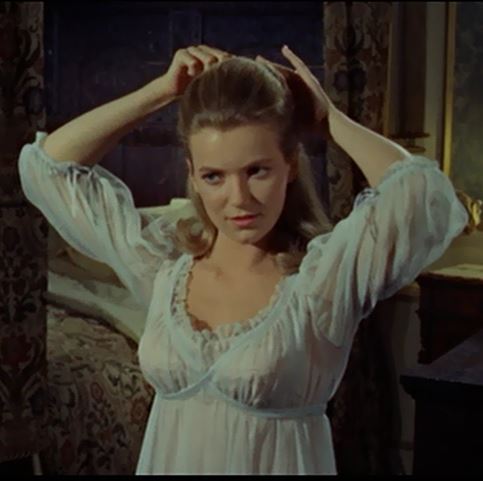
       The film has 3 saving graces. First is Veronica Carlson who is beautiful and the only likable character in the film. The second is the cinematography. There are some beautiful colors and some of the film takes place across the roof tops of the village, which is an interesting change of scenery. The director, Freddie Francis, actually won 2 Oscars, not as a director but as a cinematography, which I guess explains it. The 3rd saving grace is the bevy of cool posters that were produced. The art was better than the film, I think.
           
     Not the best volume in the franchise (but not the worst either). Not to worry though. Dracula would be back soon.


Thursday, February 6, 2020

Making the First Film: An Interview with Johnny K., Director of The Killer of Grassy Ridge


Making the First Film: An Interview with Johnny K., Director of The Killer of Grassy Ridge

In my last interview, veteran independent film maker Jim O’Rear gave insights into his career and the highs and lows of independent film making. Jim has been in the business for years and worked in all aspects of it. This interview is from the other end of the spectrum; a filmmaker just getting started.


Johnny K. has just finished his first film, The Killer of Grassy Ridge, which premiers in a few days.  Johnny tells us about his experiences, what he learned, and how he made his film. Some of the questions I asked him were similar to the ones I asked Jim in my last interview. The differences in their responses are illuminating.


I also want to thank Johnny for “getting into the weeds” with his answers. Any of you that are interested in making your own film will appreciate the detail that he goes into.

1) To start off, tell us who you are and what we are talking about.

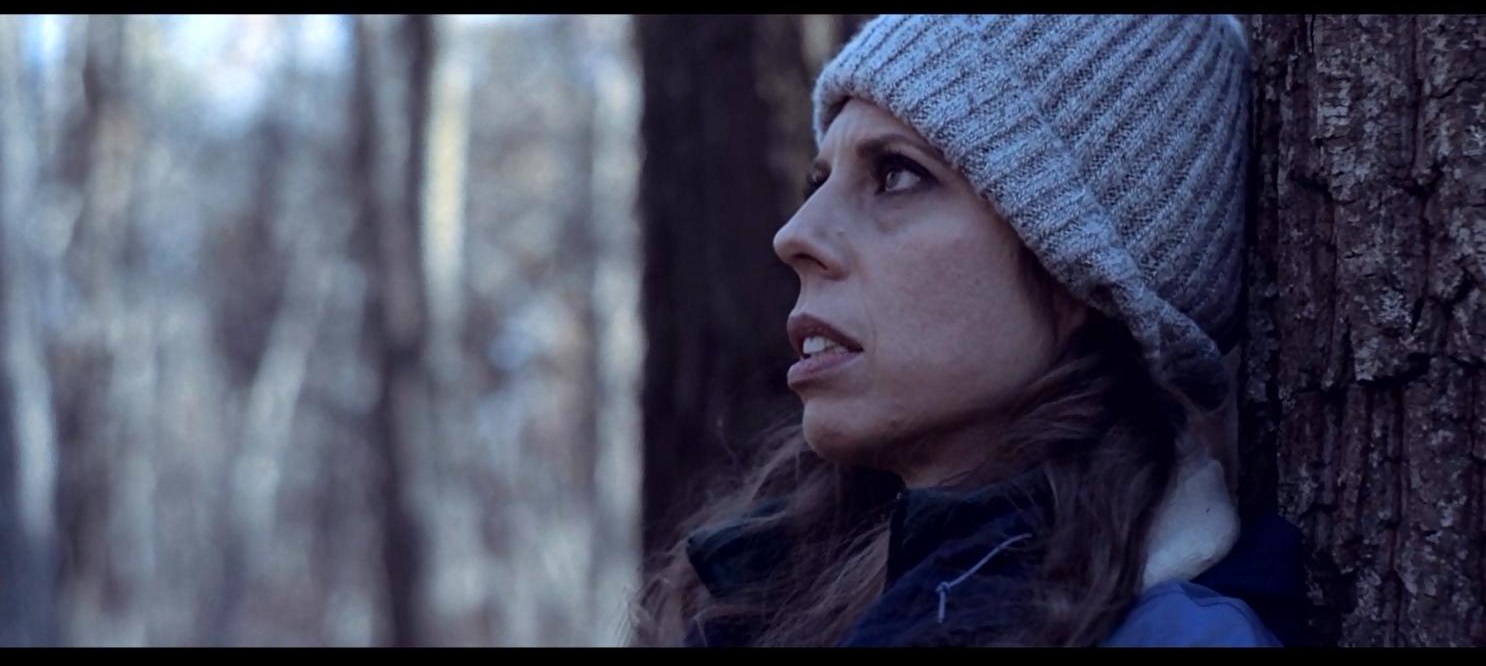
     Damn, these questions are getting hard already...  My name is Johnny K., and I’ve just finished my first short film, The Killer of Grassy Ridge, which premieres February 10th on YouTube, and is currently on the festival circuit. The film stars Heather Stone and Michael Stumbo, who both did an amazing job putting up with everything I put them through.

2) I have had a chance to see the film. I suppose the closest genre it would fit into is the “slasher” genre. Why did you choose this subject for your first film?

     I’ve always loved horror, the classic stuff and especially into the 1980s. Growing up with Michael, Jason, Freddy, and Chucky definitely scarred all of us, and a horror film is a relatively easy way to get your first film under your belt. Horror can be ultra low-budget, which was obviously appealing to me, and you can get some great spooky and atmospheric results without the need for renting huge sets, finding a ton of actors, and expensive effects shots. If you dial-in that spooky atmospheric tone just right, you can pull off some great results using very limited resources. 

     I’m also into psychological stuff – what happens when two characters with very opposing points of view come together? How does that confrontation change when you throw an axe in between them? Horror tends to lend itself well to things like that.
Plus horror fans are simply the best. They’re so passionate about the things they love, and they’ll defend them to the death! You don’t always get that passion with romantic comedies. 

"A bad picture with great audio is so much easier to watch than a great picture with terrible audio..."

3) I can remember, not that many years ago, when films like this would have looked amateurish and low budget. Not so here. It is very professional looking. Great picture quality, sound, editing etc. How much of this is due to artistry and how much is due to the technology?

       Well, thanks. It’s definitely both. Just to prove a point, and as a personal challenge to myself, I used very basic, entry-level gear on Killer. I storyboarded the entire film a month before production and knew exactly what gear I’d need to pull off each shot, and it ended up being mostly medium and close-up shots. Other than the big establishing shots of mountains, the lake, etc., there are basically no wide shots in this film, and most of the wides I actually shot on camera never made it out of the cutting room. Everything in Killer is very close-up or medium, so to pull that off I knew from my storyboards that I’d need a Prime 50mm lens, just to get that cinematic look and depth of field on the close-ups, where the subject is very sharp and the background is very blurry. A Prime 50 lens is a great, cheap piece of gear to give you a professional look. The amateurish look that you mentioned is usually a result of using older camcorders with auto-focus, which just won’t get you the same cinematic effect. But if that’s what a filmmaker has, use it! In retrospect I probably overused my lens and all the close-ups, but so much of my film is very up close and personal, right in my actors’ eyeballs, and I needed the right gear for those shots.

      The artistry comes in to play with some of the techniques. Going in, I knew I wanted to try some simple camera techniques and tricks in this film, including the “light bath” from the sun, when we first meet Heather’s character, as well as some creepy slider reveals coming out from behind trees, almost like the viewer is spying on the characters. I also had a Steadicam stabilizer on set, which I actually never used because it would take up so much time to set up the weights and counter-balances between shots as I changed out lenses and gear, and we just didn’t have enough daylight for any delays. For me, these were just some practical exercises that I wanted to try out, and for the most part, I think they suited the film.

     Knowing your way around some basic editing software can also help give you the professional look, even if your raw footage isn’t absolutely perfect. It took me a month to shoot the film (off and on), and another month purely for editing, color grading, and sound design. A lot of amateur filmmakers focus all their attention on picture quality, and audio then just becomes an afterthought. I didn’t want to commit that same sin, so I spent lots of time on audio and sound design, far more than I did on filming the video. I was lucky that Killer has minimal dialogue, and we rigged Heather up with a hidden lavalier mic clipped onto her jacket to make sure we captured her lines crystal clear. A lot of amateur filmmakers just try to use the onboard mic on their camera, and that won’t give you the best results.

     A bad picture with great audio is so much easier to watch than a great picture with terrible audio, so I spent a lot of time planning our mic setups before production started.

4) I’m not a tech person, but for any aspiring filmmakers reading this, what kind of hardware and software did you use?

     Just to prove to myself that I could do it, I shot 99% of the film on my very basic entry-level Nikon D3300 DSLR from 2016, using the kit lens for the few wide shots and a Yongnuo Prime 50mm lens for everything else. The entire film was shot 24 frames per second at 1/50th shutter speed to get the right motion blur and cinematic feel. I didn’t want it to look like a soap opera. I used neutral density filters because (of course) the sun unexpectedly popped out on our big day, and as a result, the entire film was basically shot in direct sunlight. Definitely not ideal for a horror film (or any film), but you have to play the cards you’re dealt.

     The shot of Mike Stumbo dumping a shovel full of dirt onto the camera was filmed using a cheap little Kodak video camera which we duct-taped to an 8”x10” pane of glass taken out of a picture frame. We buried the camera in the hole, facing upward, and he just dumped dirt right onto the glass. I think we got it in two takes before the glass just got too dirty. I obviously didn’t want that shot to destroy my primary camera, so we buried the little Kodak instead. That shot is also at the end of the teaser trailer.

     I had a few tripods set up, but everything was pretty much shot handheld. I like to be very agile on set, and “run and gun” as they say. I don’t like being tied down to a bunch of equipment and lights. Plus, it’s a horror film, so the jittery handheld camera gives it a little more of a frantic feel.

     I was really inspired by cinematographer Emmanuel Lubezki’s work on The Revenant (2015) with Leo DiCaprio, which was also filmed almost entirely outdoors in the woods. Like that film, I only used natural light (and firelight) in Killer, with zero artificial light sources. We did use some reflectors to bounce the sunlight around, especially late in the afternoons when we were losing daylight. A few of my shots got pretty dark, but I really didn’t want to use fake lights in the woods. This also allowed me to be very agile while filming without having to move a bunch of lights and tripods around every 20 minutes. I love to run and gun. 

     For audio, I used a Zoom H1N recorder with a lavalier mic hidden on the actors, and a couple of separate mics for various foley-work and “wild” sounds.

     For editing, I used my old faithful version of Sony Movie Studio Platinum 12 (Vegas) from 2014 or so. It’s an antique, but I’m way too stubborn and cheap to learn new software. Gotta use what you have, right?

5) As one would expect , first films tend to be short films. Why is that; necessity, cost, time, other factors?

All of the above. If you’re a brand new author, isn’t it much more realistic to publish a short story or two, rather than a 90,000-word novel right out of the gate? Why not start with realistic goals? I’d love to shoot a feature film one day, but I know that in the time it would take me to write, shoot, and cut a feature, I could probably make four or five short films and not get burned out on one huge project that will take five years of my life to make.

It also comes down to the demands of the story. Some stories need two hours to be told. The Killer of Grassy Ridge needed eight minutes. No less, no more; and I’m good with that. 

"... the roads were closed for ice. I don’t think a single frame of Killer was shot above 36 degrees..."

6) How much time went into this, from the moment you decided to do this to the moment the film was finished?

     The concept was born on November 3, 2019 when the first storyboard panel was drawn. Post-production completed January 4, 2020, so it ended up being 63 days or so total.
We shot our big day with the actors on-location in Virginia’s Shenandoah Valley on November 24, pretty much from dawn until dusk, and it was a race against sunlight to make our day. We shot Heather’s solo scenes over a couple days in mid-December, with snow on the ground. I shot my last inserts of the mountains in East Tennessee right after Christmas, but couldn’t get to my scouted location because (of course) the roads were closed for ice. I don’t think a single frame of Killer was shot above 36 degrees (which also causes technical challenges with equipment, moisture/fogging, batteries dying faster, etc.). I learned some new tricks about cold-weather filming, that’s for sure. 

I have no idea how many hundreds of hours went into editing, but that’s basically all I did in December. I took time off for the holidays, just to get away from it, and then locked myself in the editing room for the final push in early January before the first festival deadlines. As a personal challenge, I had given myself two months to make this film, and from start to finish, so I’m very happy with 63 days yielding eight-minutes of film I’m proud of.  

"...no matter how much you plan, everything will always take exactly twice as long as you expect."

7) Other than tricks for cold-weather filming, what other lessons did you learn from making this film?

    Show some love for your cast and crew and don’t make a film that’s 99% exterior shots in late November and December… They were all troopers, and put up with a lot.
I learned that simpler is always better, and that no matter how much you plan, everything will always take exactly twice as long as you expect. Most importantly, I learned that I could actually write, shoot, and edit a film that I’m very proud of, in only a couple months. One year ago, I wouldn’t have thought that was possible.

8) I think I can say without spoiling anything that it is a very small cast, and you’re not in the film. Was there any temptation to put yourself in front of the camera?

    Absolutely not. I’ve done some on-camera work as an actor, but there was never a chance I would be in this film. The story, just as you saw it, is exactly as written, and it’s a very small, intimate story between a tiny number of characters. Honestly, I have no idea how Clint Eastwood and many television directors can act in the same production they’re directing. That would drive me nuts. I have to see what the camera is seeing, to keep it framed just as I want it. I want to see the actors’ expressions in real-time, not on playback. I’d have a very hard time handing the camera off to someone else while I jumped in front of camera as an actor in my own picture. Plus, directing is lots of work and stress, especially on micro-productions where you’re wearing many hats. I’m busy worrying about lights, and staying on schedule, and capturing still photos for promotional material to be used two months later, and script revisions, and shot lists, all as the sun is going down behind me… can you imagine trying to remember your lines on top of that?  I, personally, couldn’t do it, and it would be disrespectful to the other actors I’m working with, because being in the scene would not have my full attention and energy. I’d be worried about shadows, or making sure someone gets lunch there on time so we don’t fall behind schedule. 

9) Speaking of wearing many hats, I think I only counted about 10 different names or so in the credits, so a lot of folks were pulling double duty, including you. What skills did you have to learn just to make the film?

     More like quadruple duty. I really can’t thank the cast and crew enough. I planned our big shooting day with the absolute minimum crew necessary. I don’t like to have a bunch of people standing around waiting to be given a task. It screws with the creative energy on set. So everyone did everything. I dug the burial hole and distressed all the props and wardrobe in advance. Heather not only kept me on schedule and kept up with the shot-list, but handled hair and makeup, and of course co-starred in the film. Andrew Bowers was on audio, monitoring the mics and recorders, as well as shooting behind-the-scenes footage and running for lunches. Raynstoyk Czar was everywhere at once, changing out frozen batteries, set photography, handling props, carrying gear to and from locations, and applying some blood and gore when that time came. Huge thanks to them. They did everything I asked, and so much more.

     Most of the skills I learned on this project were all related to planning and logistics. I needed to walk in the door with a solid schedule and a plan, showing exactly who would be where, doing what, and when. It really comes down to basic project management; using the best resources you have available on-hand to get the job done as efficiently as possible before your light disappears. I learned a lot in that respect.

     On the technical side, I had enough background in filming small, non-narrative projects and editing to feel comfortable, but I had significantly less experience color-grading a narrative project like this, so that was a new experience I had to learn. Horror can be a very forgiving genre when it comes to color-grading. Typically everything in the genre is very blue, cold, and de-saturated… or it’s on fire. In post, I de-saturated the footage quite a bit, since the November leaves were really vibrant during our shoot, and, while the reds and oranges were beautiful, it wasn’t appropriate for the film. But a few colorful leaves still snuck their way in there.
  

10) One of the characters has a very Otis Driftwood thing going on. I have to know, was that his natural look, or was that hair and make-up?

     That’s just Mike Stumbo’s natural look. Of course, we covered him in dirt, grime, and makeup, put hair over his face, shredded his wardrobe with razor blades and burned holes through his clothes, but the parts that really matter are all his. Actually the role was written specifically for Stumbo. He has a great look that I knew would translate perfectly on the screen. He was exactly what I needed for Killer, and fortunately he was available. There was no second choice for casting, and even my chicken-scratch storyboards were drawn on day-1 with Stumbo in mind. 

     I’ll make the bold prediction now: I wouldn’t be surprised if we saw more of Stumbo in future film projects. He just has a great look, and through the beard, hair, and makeup, he’s got those great eyes that can be very intense on camera. And of course, he’s one of the sweetest and nicest guys to work with on set, and a great guy in general. This film would not have been made without Mike Stumbo.

    Regarding Otis Driftwood, this makes me a terrible horror fan, but I have to admit that I’ve never seen any of those Rob Zombie movies, so I had no idea who Otis was until people kept mentioning him to me after seeing set photos from Killer. Needless to say, you’re not the first person to bring up that comparison, but that’s just Mike Stumbo’s natural look, and it’s what led me to cast him to begin with.

11) As far as finishing the film, how did you know when you were done?

     I was really inspired after learning about the 48 Hour Film Project, where you only have 48 hours to write, shoot, and cut your movie. That’s extreme, and I loved the idea of a project I couldn’t procrastinate, so I gave myself two months to start and finish the film, just as a personal challenge. Otherwise, it would become just another project languishing on my hard-drive that I would put off forever, or continuously tweak and try to perfect for the rest of my life. I knew I was done on January 4, 2020 when I watched the final cut one last time, and my notes of major fixes had dwindled down to nothing. Plus, my first festival deadlines were Jan. 6th, so it had to be done. As creators, we can tweak things to death, and we’ll never be 100% happy. Even a couple of the final shots in Killer still irk me a little, but part of filmmaking is knowing when to stop screwing with it. Otherwise, you’ll never get anything done. 

   " I’ve spent the last month promoting the film every single day..."

12) You’re finished with the film making, now comes the hard part: getting the word out. What do you have planned?

     I’ve spent the last month promoting the film every single day, sending review requests and advance screeners to magazines, submitting to festivals, doing podcasts and interviews like this one, and planning a premiere party!

     Festivals weren’t the goal from the beginning. My goal was to make a good movie that I was very proud of, and only after feeling that I’d done that, I took a closer look at the festival circuit. So far, Killer has been submitted to more than 20 festivals, from India, France, and Belgium, to Canada and many here in the U.S., and that list will grow as the year goes on. We just got our first selection notification last week, so I’m happy to announce that Killer is one of only 10 short films selected to screen at the 2020 Bloody Flicks Awards in the U.K.! That is such a huge honor, and what a great way to kick off the festival phase of this journey.

13) If you know, what is the typical length of time someone has to promote a film before the word starts to get out?

     I don’t think there is an answer to that. I think it’s just a matter of persistence; sending out a handful of requests and promo material every day. Eventually, something big will hit. I’d love to get a small mention by Fangoria or one of the major horror outlets. That would just be a great personal success for me as a lifelong horror fan.

"...if you’re rejected, it’s not like it’s personal. There’s probably a good reason for it. Find that reason, learn from it, and move on."

14) Everyone has to deal with rejection, but especially artists. How do you deal with it?

I’m also a writer and a recovering musician, so I’ve got pretty thick skin when it comes to rejection. It’s all part of the game. Read up on how many times J.K. Rowling got rejected before she introduced the world to Harry Potter. Rejection is inevitable, but I like to also cast a wide net. I think a lot of creators set their hopes so high on one or two HUGE milestones, and when they get rejected by those, it shatters their whole world.  Cast a wide net – your project probably just hasn’t found its audience yet. In fairness, if you’re rejected, it’s not like it’s personal. There’s probably a good reason for it. Find that reason, learn from it, and move on. Don’t sit around and mope.

" I suddenly had this fantastic dark tension to work with that no storyboard could have predicted."

15) As far as this film goes, what are you most proud of?

     Easy answer. I’m proud that I gave myself realistic goals, met them one by one, and actually finished a project that I started within the timeframe. That’s huge for me, whether anyone sees the movie or not. I get distracted before I can finish eating a bowl of cereal, so for me to actually create and distribute something I’m really proud of, that’s a huge accomplishment for me, regardless of whether the film is “successful” or not.

     I’m also incredibly proud of the actors. Once the camera started rolling, I saw a different side of them, and they knocked it out of the park and exceeded all my expectations. Their scenes together actually influenced the tone of the film in the editing room. Because of their performances, I suddenly had this fantastic dark tension to work with that no storyboard could have predicted. Their strong performances turned the second act of the movie into much more of a performance piece than I expected, versus a straight-up slasher flick, and it really blew me away. They say there’s the movie you write, the movie you shoot, and the movie you edit, and I had no idea what that meant until I finished Killer. 

"Stop making excuses and go shoot that scene this weekend... I wish someone had told me that stuff 10 years ago." 

16) What advice would you give to someone else that wanted to make their first film?

     Get off your butt and go shoot one scene this weekend. Shoot it on your phone if you have to, and then learn how to cut a couple shots together with music and see how that affects your pacing. Start easy. Put down the script for your six-hour sci-fi space battle, or your historical epic with 200 characters that you’ve been working on for 10 years. Go this weekend and shoot two people in a room arguing about something. Put them by a window so you get sunlight on half their faces. They don’t even need to be actors. Grab your friends, and seriously, go shoot this on Saturday. 

     I spent many, many years complaining that my gear wasn’t good enough to make a film... and guess what... I spent many, many years never making a film. You don’t need $10,000 of gear to learn composition, blocking, lighting, and depth of field. We live in an era where you can figure that stuff out with the phone that’s in your pocket right now. It’s never been this easy. It doesn’t matter if your footage is pure garbage, because that’s how we learn. Stop making excuses and go shoot that scene this weekend. Shoot it on your lunch break at work. I wish someone had told me that stuff 10 years ago. 

     Also, go subscribe to filmmaker Darrius Britt on YouTube right this second (D4Darious). He was a huge inspiration to get me off my butt to go make a movie, and he’ll inspire you too.

17) OK, now for some fun questions. Who are your favorite film makers and why?

     No surprise, but I’m a huge John Carpenter fan. Halloween, The Thing, Escape from New York, Big Trouble…, They Live, on and on. I know it’s cliché, but Carpenter knew how to make so much by using a little, especially his earliest work, and all those films still stand the test of time. Some are even better today than when they premiered. 

     As I mentioned before, the cinematography of Emmanuel Lubezki makes The Revenant one of the best-shot films I’ve ever seen. Of course, 1917 is amazingly-shot as well, but during production of Killer, I was inspired by Lubezki’s work on Revenant almost on a daily basis. 
   

18) What movie have you seen more than any other, and why?

    Good question. Probably Jaws or Raiders of the Lost Ark, my two favorite films (thanks Spielberg). The original Star Wars trilogy would be up there as well. I also have an unnatural affection for The ‘Burbs with Tom Hanks, which is probably my favorite comedy of all time, and I love director Joe Dante. 

19) What movie line do you find yourself quoting more than any other?

    Lately, it’s been “our situation has not improved,” in my terrible Sean Connery accent (after they set the room on fire in Indiana Jones and the Last Crusade). “I’ve got a bad feeling about this,” also seems to come up a lot in my life.

20) If folks want to check out the film or find out more about it, where can they look?

     The Killer of Grassy Ridge premieres on YouTube on February 10. 
Follow Kaotica Studios on Facebook and Twitter, and catch me on Twitter @ThatJohnnyKGuy. I’d love to hear your thoughts on the film, and thanks so much for the interview!

Wednesday, February 5, 2020

Dracula, Prince of Darkness


Dracula, Prince of Darkness
1966

Director- Terence Fisher
Cast- Christopher Lee, Andrew Keir, Barbara Shelley, Suzan Farmer, Francis Matthews, Bud Tingwell, Thorley Walters, Philip Latham
            
      This is the third installment in the Hammer Dracula franchise , although only the second to feature Dracula, following as it did behind The Brides of Dracula. The Count is long since dead, thanks to the efforts of Van Helsing in Horror of Dracula. However, the villagers of Karlsbad (the town used instead of Transylvania) still remember and live in fear of him.
           

    A group of English tourists are staying at a local tavern where they meet a clergyman that is passing through, Father Sandor (Andrew Keir). The priest tells them to avoid the local castle, a castle that appears on no maps. Circumstances occur that put them within sight of the castle and since they were warned not to go, naturally that is exactly what they do, despite the misgivings of one of their party, the ever worrying Helen (Barbara Shelly).
            

     They are greeted by a super creepy butler, Klove (Phillip Latham) who feeds them a bologna story about his deceased master leaving instructions that the castle always be ready to receive guests. I’ll give you three guesses as to who his master was and the first two don’t count.
         

      In the night , Klove murders Helen’s husband (Bud Tingwell) and uses the blood in a ceremony to bring Dracula back to life. The first thing that the Count does is feed on Helen, turning her into a lustful vampire (pretty unfair since she was the only one that didn’t want to go to the castle in the first place). The two remaining tourists Diana (Suzan Farmer) and her husband Charles (Francis Mathews) flee the castle before Dracula can sink his fangs into them.
            
     They seek refuge at a local monastery where they run into Father Sandor again. The Father vows to stop Dracula with the help of Charles but they are betrayed before they have the chance. A very Renfieldesque madman (Thorley Walters) is staying at the monastery and lets vampire Helen and the Count in. While the Brothers are dealing with Helen, Dracula makes off with Diana.
           
     The Father follows them to Dracula’s castle where he deals with the Count by having him fall into the partially frozen moat surrounding the castle, getting trapped beneath the ice. Now, I know that some vampire lore says that vampires can’t abide running water. I’ve always had a problem with that given that the Count crossed the ocean on board the Demeter. But whatever. As deaths go, this was not the most humiliating that the Count would suffer in the franchise nor was it the silliest use of running water that we would see.
          

      Aquatic homicide aside, this is a really good movie. Many people consider it the superior installment of the entire franchise. Although Peter Cushing had been the star of the franchise in the first two films, this established Christopher Lee as the star. It also established, for better or worse, the trend of Dracula not talking in the films.
          

      There are several standout moments in the film. Though Father Sandor was no Van Helsing, he was the best of Dracula’s non-Cushing opponents in the series of films. Klove is a creepy henchman. The sacrifice that he makes, draining the blood out of a victim’s dangling body was pretty graphic for its day and set the trend for similar scenes in future Hammer films. Also, I’ve heard horror commentators before compare the scene of a vampiress being staked by hunters as an analogy for gang rape (as what happens to Lucy in the Dracula novel). The scene of Helen being held down, arms and legs pinned, while Sandor rams a stake into her shows why those comparisons are made.
            

     Overall, a very entertaining movie that helped further the franchise, and genre,  in a positive direction.

       The movie was made back to back with another Hammer film, Rasputin the Mad Monk, using many of the same sets and cast members including Lee, Shelly, Matthews and Farmer. Most of the cast were Hammer regulars. Besides Christopher Lee, Barbara Shelly also appeared in The Shadow of the Cat, The Gorgon, and Quartermass and the Pit, with Andrew Keir. Keir also appeared in the Hammer films, The Viking Queen, Blood from the Mummy’s Tomb and The Devil Ship Pirates (with Lee, Phillip Latham and Suzan Farmer). Suzan Farmer also starred in The Crimson Blade. Thorley Walters starred in the Hammer version of Phantom of the Opera as well as Frankenstein Created Woman, Frankenstein Must Be Destroyed and Vampire Circus.

Fun fact- While shooting, Barbara Shelly accidentally swallowed one of her vampire fangs. She had to drink salt water to bring it back up as they were on a tight schedule and had no spare fangs!